
Tag: UNESCO-IHE
-

From a dream of becoming a Medical Doctor to a Civil Engineer – the Career Journey of Jennifer Isoke
Jennifer Brenda Isoke is a Ugandan female Civil Engineer with a purpose. Given her vast knowledge and experience, Isoke has been part of the UPGro team of researchers under the T-Group.
-
Cutting-edge discovery on viruses in groundwater: T-GrouP at EGU press conference
Associate Professor Jan Willem Foppen, leader of the T-GroUP project will be presenting his team’s work on mapping DNA viruses in groundwater under African cities at a press conference on Monday 8th April at 14:00 CEST. This is part of the General Assembly of the European Geosciences Union (EGU), that will be held in Vienna,…
-

Life after UPGro: an interview with Early Career Researcher, Shabana Abbas
Interview with T-GroUP young researcher
-
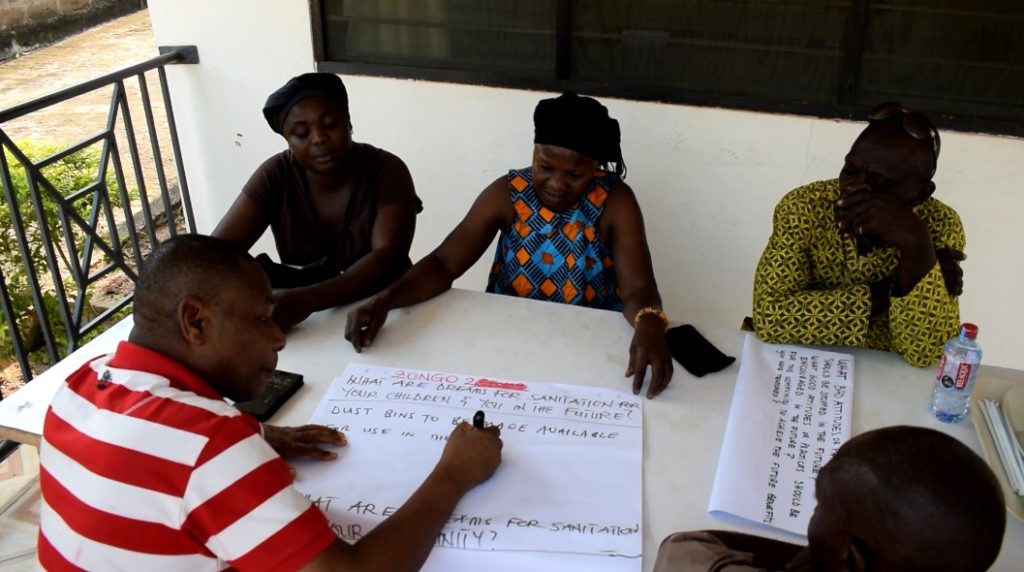
Facilitating community members in Dodowa to envision their communities in the future
by Jan Willem Foppen (Re-posted from T-GroUP) End of 2017, the Dodowa Local Transition Team facilitated the process of envisioning, one of the most important steps in the Transition Management process, through the organisation of (four) workshops for (four) local communities. Each workshop started with a short summary of the results of previous meetings and…
-
Finalising Obed’s fieldwork in Dodowa
By: Obed Minkah Final fieldwork activities in Dodowa included the establishment of monitoring network which consist of 40 wells to monitor groundwater fluctuation and to help us determine the groundwater flow direction. In order to know the groundwater flow direction, the monitoring wells were levelled to each other using a total station. It was daunting task…
-
Water quality is interesting!
By: Carlos Enrique Aponte Rivero on T-group.science Yes! It is very interesting for these kids, obviously amazed by the strange equipment put into the water. As soon as I started to set up the probes and to do the water quality measurements, I was suddenly surrounded by children, getting closer and closer trying to find out…
-
Exploring cases of community participation in (ground)water governance in Dodowa
By: Shona Jenkins (from t-group.science) By the end of February, I will have spent 3 weeks conducting interviews with community members, community leaders and representatives from the local government across 11 communities in Dodowa. Throughout the interview process, I have attempted to better understand the water reality in each community: what sources of water are…
-

Who gets what water in Arusha?
from: http://t-group.science/2016/01/who-gets-what-water-in-arusha/ By Shabana Abbas Arusha is officially a small city of over 400,000 people (according to official census) but urban authorities believe this to be vastly underestimated and the number could be over 700,000. As part of my research on urban water supply, I visited some of the most unplanned and low-income parts of Arusha city…
-
T-Group MSc. Research Students Arrive in Tanzania
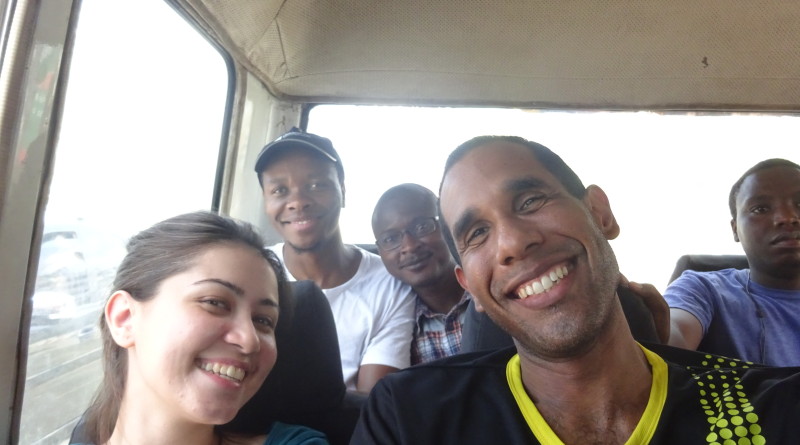
by: Maryam Nastar (on T-group.science) Three students from the UNESCO-IHE Institute for Water Education have arrived in Dar es Salaam and will commence their master’s thesis field work in the coming week. Shabana Abbas, Carlos Aponte and Tlhoriso Morienyane will be based in Arusha for three months to study different aspects of groundwater. Their thesis work…
-
T-GRoUP kicks off
By Thloriso Morienyane and Jan Willem Foppen (reposted from: t-group.science) From 1-3 September, the T-GroUP kick off workshop took place at UNESCO-IHE in Delft. The main purpose of the workshop was to get to know each other, to learn more about Transition Management and Learning Alliances, to discuss data collection programs, to identify overlaps and…
 UPGro
UPGro 