
Category: Catalyst Project News
-
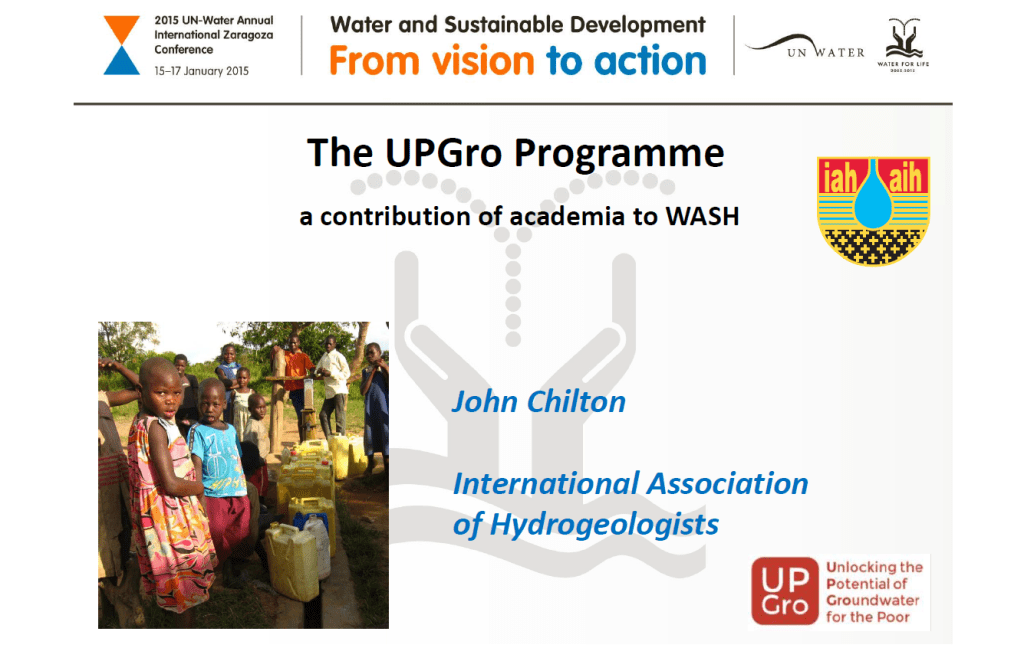
UPGro invited by UNICEF to present at the UN Zaragoza Conference
(with thanks to John Chilton, Sharon Velasquez-Orta and Jose Gesti-Canuto) The UN-Water Annual Zaragoza Conferences serve UN-Water to prepare for World Water Day, which in 2015 will focus on “water and sustainable development” and celebrated the end of the International Decade for Action ‘Water for Life’, so it was especially important for taking stock of…
-

A tale of two cities: How can we provide safe water for poor people living in African cities?
Dan Lapworth, Jim Wright and Steve Pedley are working to find out. Reproduced from Planet Earth Winter 2014, p 22-23 Across much of Africa, cities are growing quickly. Current projections estimate that by 2050, 60 per cent of the population will be living in urban areas – half of them in slums. Many of these…
-
Africa Groundwater Research
9th December 2014 [PDF] Water for Wajir [PDF] Hidden Crisis – handpump failure in Uganda In this webinar, Jan de Leeuw presented his project’s work in developing and using a decision-support tool to enable a municipality to quantify the risk of developing a major new groundwater source from the Merti Aquifer, in Kenya. John Chilton…
-
Do you trust your gut instinct?
This blog post, for the ARIGA Catalyst Project, was originally published as part of the ‘Talking Science’ and Water, Land and Ecosystems Blog . Making better development decisions with decision analysis tools Making decisions is difficult. Most of us spend a lot of time procrastinating about decisions in our everyday lives, struggling to weigh pros…
-
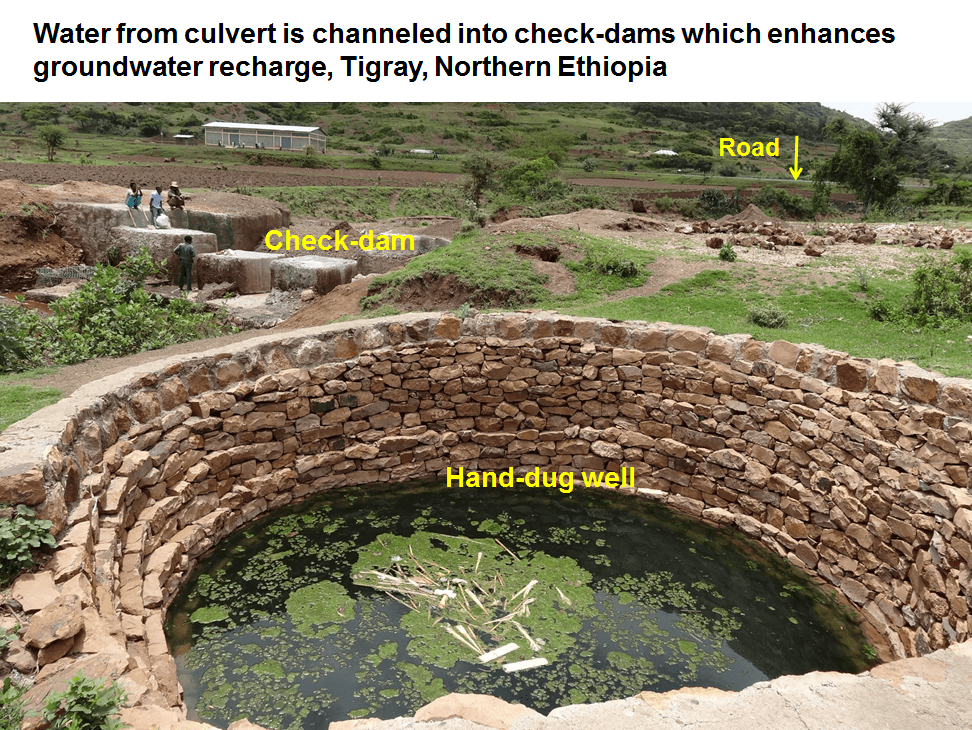
How to… design roads for water harvesting and groundwater recharge
Roads can devastate a landscape – scarring it, creating barriers for wildlife and accelerating stormwater so that valuable farmland, habitats and homes get washed away or polluted. What if didn’t have to be that way? What if roads would work with the grain of nature rather than against it? One of the UPGro teams, lead…
-
Upcoming UK event – Groundwater, poverty and development
Save the date: Friday 28th November 2014 Timing: 0900 – 1700, lunch provided. Place: Overseas Development Institute, 203 Blackfriars Road, London SE1 8NJ, UK To register to attend, or watch online, visit: www.odi.org/events/4037-groundwater-poverty-development and click on “Register” This one-day meeting, jointly convened by the UPGro Knowledge Broker Team and ODI’s Water Policy Programme, will showcase…
-
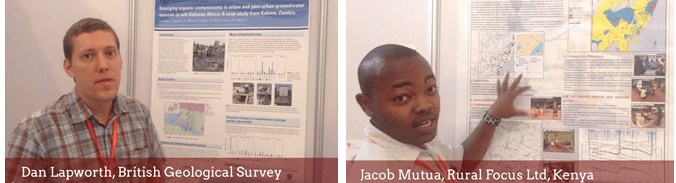
Poster presentations about work in Zambia and Kenya (Video)
At the IAH Congress, we asked two of the UPGro researchers to present their posters: Jacob Mutua, Rural Focus Ltd, Kenya, describing the “Risks and Institutional Responses for Poverty Reduction in Rural Africa” Catalyst project Dr Dan Lapworth talks about the project that he has been leading: “Mapping groundwater quality degradation beneath growing rural towns…
-
Meet the researchers: Daina Mudimbu (Video)
Daina Mudimbu, University of Zimbabe, from the project: Resource limitations to sustainability of groundwater well-points in basement complex regions of SSA
-

High-Tech meets Low-Tech: Using remote sensing to help manual drilling
Drilling for water can be expensive: it can cost up to £10,000 to drill a borehole that will have a £500 handpump installed on it. However, there are alternatives – manual drilling methods are often most effective and just as good quality, but the challenge for the drillers is knowing where they can find good…
 UPGro
UPGro 