
Author: RWSN Secretariat
-
BRAVE: New climate change forecasts for West Africa
via BRAVE Represented at the 4th PRESASS Regional Climate Outlook Forum in Accra, Ghana, May 15-19 — BRAVE BRAVE team members Professor Ros Cornforth, Professor Aondover Tarhule, Dr Galine Yanon and Aaron Aduna attended the PRESASS Forum organised by Agrhymet Regional Centre of Niamey, the African Centre of Meteorological Applications for Development (ACMAD) and the Ghana…
-
Ethiopia Phase 2 – Survey Update
Phase 2 of the Hidden Crisis fieldwork is underway – right on schedule. The work has started in Ejere, a Woreda about 100 km north of Addis in Ethiopia. In this major survey of 50 poorly functioning rural waterpoints, we spend two days dismantling and testing each water point to work out what the main […]…
-
Uganda lift off!
The physical sciences longitudinal studies have kicked off in Uganda this week. The aim of these longitudinal studies is to capture the time-based hydroclimatic and hydrogeological processes of the groundwater system at selected hand pumped boreholes (HPBs). These temporal datasets provide valuable information to understanding HPB functionality that could not be addressed from the two […]…
-
BRAVE presentation at the 9th Internationale Conference on Climate Change Impacts & Adaptation
re-blogged from BRAVE Dr Galine Yanon presented a paper at the 9th Internationale Conference on Climate Change Impacts and Adaptation: communicating and collaborating for resilient solutions to climate change, at the Anglia Ruskin University in Cambridge, UK April 21-22, 2017. The conference had more than 70 participants from 26 countries. Dr Yanon presented the paper, Local governance of…
-
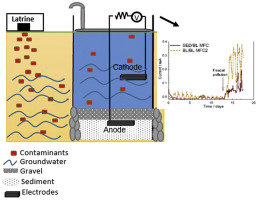
Promising new groundwater pollution sensor – New UPGro paper published
Shallow groundwater wells, are the main source of drinking water in many rural and peri-urban communities. The quantity and variety of shallow wells located in such communities make them more readily accessible than private or government operated deep boreholes, but shallow wells are more susceptible to faecal contamination, which is often due to leaching pit…
-

New: “Can ‘functionality’ save the community management model of rural water supply?
We are pleased to share a new UPGro paper from Luke Whaley and Prof. Frances Cleaver (Sheffield University) of the Hidden Crisis study – “Can ‘functionality’ save the community management model of rural water supply?” It is primarily a literature review paper so many elements will be familiar to rural water practitioners, however, Whaley and Cleaver…
-

Fossil groundwater vulnerable to modern contamination
Study shows that over half of global groundwater is over 12,000 years old Most of the groundwater in the world that is accessible by deep wells is fossil groundwater, stored beneath the earth’s surface for more than 12,000 years, and that ancient water is not immune to modern contamination, as has been widely assumed. This…
-
Scale of global water crisis could be unknown due to inadequate metrics, study suggests #worldwaterday
Re-posted from UCL A new study by UCL researchers exposes substantial limitations in the ability of current metrics to define ‘water scarcity’. 21 March 2017 A new study by UCL suggests the scale of the global water crisis could not be properly known at due to inadequacies with the current metrics used to measure it.…
-

New pollution risk maps for Africa to help with achieving safe water for everyone
Media Release: World Water Day 22 March New pollution risk maps for Africa to help with achieving safe water for everyone. Responding to UNICEF/WHO report on Safely managed drinking water The United Nations Children’s Fund (UNICEF) and the World Health Organisation (WHO) have published a key Joint Monitoring Programme (JMP) report on “Safely managed drinking…
-
@engineer4change : Charitable Foundations Have a Unique Opportunity to Change the WASH Sector
In a recent Engineering for Change (E4C) article, “Charitable Foundations Have a Unique Opportunity to Change the WASH Sector”, UPGro Hidden Crisis research was cited in making the case for stronger efforts by charities and funders to focus on the sustainability of what they fund: The Unlocking the Potential for Groundwater for the Poor (UPGro)…
 UPGro
UPGro 